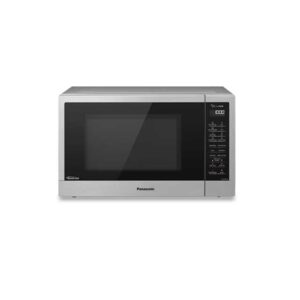

Panasonic Microwave Ovens in Pakistan — Compare Sizes, Types & Latest Features

Looking for a Panasonic microwave that suits your family size, cooking style, and counter space? You’re in the right place. This category brings together Panasonic Solo, Grill, Convection and Inverter models so you can quickly shortlist by capacity (20–32L) and features like Genius SensorAuto Cook, and Child Lock. Prefer a human recommendation? Call/WhatsApp +92 330 9997564 or visit us at Mariam Center, Shop 5, Abdullah Haroon Road, Saddar, Karachi for friendly, practical guidance.

If you want to compare across brands too, start from our main Microwave Ovens hub.

Shop by Capacity (20L • 23L • 27L • 30L • 32L)

20–23 Liter (Small families, hostel rooms, offices)

For daily reheating, tea/coffee, ready meals, and basic defrosting, 20–23L is the sweet spot. These models are compact and easier to fit under overhead cabinets in Pakistani kitchens, especially if your countertop depth is tight. A 20–23L Solo or Grill unit will comfortably handle one dinner plate or a small casserole.

Who it suits: 1–3 people, students, shared apartments, small offices. What to prioritise: Reliable defrost, quick-start/express modes, and a straightforward control panel. If you warm tea or milk frequently, look for programmable memories or Auto Cook presets. Local tip: If your kitchen has frequent voltage fluctuations, plug the unit into a properly rated surge protector or stabiliser. It protects the electronics and helps maintain performance during load-shedding changeovers.

27–30 Liter (Most households)

If you cook for 3–5 people, or often reheat family-size leftovers, step up to 27–30L. The turntable and interior height are better for larger dinner plates, mixing bowls, and rectangular glass dishes. Grill or Convection models at this size bring real versatility for browning kebabs/toasts and baking small batches.

Who it suits: Typical Pakistani households entertaining occasionally on weekends. What to prioritise: If you love crispy tops on lasagne or gratin, a Grill is worth the small price bump. If you bake or roast, Convection makes sense—more on that below. Local tip: Check door swing clearance. Narrow galley kitchens in Karachi apartments or Lahore upper-portion kitchens sometimes have tight passages; ensure the door opens freely without hitting the fridge or a cabinet handle.

32 Liter (Entertaining, bulk cooking)

Families that host often or like baking bigger trays will appreciate 32L. This size gives room for wide platters and tall bowls, cutting down on batch cooking.

Who it suits: 5+ people, joint families, home bakers selling small batches. What to prioritise: Turntable diameter (bigger platters need more width), easy-clean cavity, and solid door hinges. Convection or Inverter models are common at this size and typically deliver more even results. Local tip: Confirm the unit’s weight and ensure the shelf or trolley is sturdy. Keep a few inches of space at the sides and back for ventilation—especially important in summer months.

Choose Your Type

Solo Microwave Ovens

Best for: Fast reheating, defrosting, steaming/softening, and day-to-day convenience. Solo models are the simplest and most budget-friendly way to add microwave convenience to your kitchen. They don’t brown or bake; instead, they excel at quick tasks—warming rotis, heating biryani portions, melting butter, softening desi ghee, or defrosting chicken before a quick karahi.

Why pick Solo: Lower upfront cost, fewer parts to maintain, typically lighter and easier to move/relocate, and simple controls that anyone at home can use. Things to check: Auto defrost by weight/time, easy-clean interior with a removable turntable, and a Child Lock if kids press buttons out of curiosity. Pakistan note: If you rely on UPS, ask about the unit’s wattage and startup draw. A modest Solo is often friendlier for backup power systems.

Grill Microwave Ovens

Best for: Toasting/browning sandwiches, reheating pizza with better texture, quick tikka skewers, cheesy garlic bread. Grill models add a top heating element that gives colour and crunch to food microwaves alone can’t provide. They’re great for finishing touches—melting and browning cheese on pasta or crisping the top of a casserole.

Why pick Grill: Browning without switching on a full oven; useful accessories (like a metal rack) to bring food closer to the grill element; a step up in versatility without the complexity of convection. Things to check: Whether a grill rack is included and its cleaning ease; combined microwave+grill programs (for speed + crisp); interior splash guard or coatings that simplify cleanup. Pakistan note: If your countertop is next to a gas hob, keep safe clearance from open flame and splatters. Wipe the interior after oily cooks to prevent smells and residue.

Convection & Inverter Models

Best for: Baking pastries and pizzas, roasting chicken, one-tray dinners, and more even heating across bowls and platters. A Convection microwave has a built-in fan and heater that circulates hot air, so you can actually bake and roast—something a Solo or basic Grill can’t do. It’s ideal if you want an all-in-one that reheats like a microwave yet bakes cookies or chicken wings without switching on a full oven. For Karachi apartments or Lahore portions where space is tight, this combo can replace a separate OTG for small to medium batches.

Why pick Convection: Real baking/roasting modes with temperature control; combination programs (microwave + convection) to cook through and brown on top; often larger interiors and better racks/trays for airflow. Things to check: Temperature range (e.g., can it reach 200–230°C for pizza bases?); included accessories (low/high racks, baking tray) and their cleaning ease; preheat prompts and audible alerts; turntable size vs. your pans (measure your favourite 10–11″ tray before buying).

Now, about Inverter technology: traditional microwaves cycle power ON/OFF to approximate “lower” settings; Inverter units deliver a steadier, more precise power flow. In practice, that means gentler reheating and defrosting—fewer hot edges and icy centres—and better texture for delicate items like fish, paneer, or pastries. If you often defrost meats for everyday Pakistani cooking or reheat biryani without drying it, an inverter model can feel like a meaningful upgrade.

Why pick Inverter: More even heating at lower power levels (better texture); smarter, faster defrost that’s kinder to meat fibres; often paired with premium features (sensor cooking, refined presets). Local tip: If load-shedding overlaps with cooking, inverter units may feel a bit more forgiving on backup power due to smoother power draw—but still confirm wattage and UPS capacity with your electrician.

Panasonic Highlights to Look For

Genius Sensor & Auto Cook Menu

Panasonic’s Genius Sensor monitors steam and humidity to auto-adjust time and power. Result: you press fewer buttons and get fewer guesswork outcomes. For daily life in Pakistan, this shines when reheating biryaniniharikaalay channay, or chicken karahi—the sensor helps the centre come up to temperature without drying the top layer. It’s also handy for rice, pasta, and vegetables where doneness can vary.

Pair that with Auto Cook menus and you get a toolbox of presets: popcorn, beverages, oatmeal, potatoes, noodles, and more. Many Panasonic ovens include multiple local-friendly items (naming varies by model). You select a category, sometimes the weight/servings, and the oven does the rest.

Tips for best results: Use microwave-safe, flat-bottom containers so steam circulation is predictable. Lift plastic lids slightly (vent) to prevent pressure buildup. For mixed plates—e.g., roti + curry—place the dense item to the outside of the turntable ring so it catches more energy. If your model lets you tweak doneness (+/−), start at the default and adjust after tasting. (Feature names and preset lists vary by model; check the specific product card for the exact menu and supported programs.)

Safety & Convenience (Child Lock, Quick Start, Defrost)

If there are kids at home, Child Lock is non-negotiable. It disables the keypad so curious fingers can’t start a cycle. Quick Start/Express buttons (often +30s) are excellent for tea reheats or late-night snacks—press and go, no settings maze. For Defrost, look for weight-based options and foods like meat, poultry, and fish; Panasonic’s inverter models are especially good at thawing uniformly so your chicken breast isn’t half-cooked at the edges.

Hygiene note: Wipe the interior after oily/messy foods (seek ceramic-enamel or easy-clean coatings). Keep vent grilles dust-free; it helps cooling and extends component life. Avoid sealed containers; always vent to prevent hazards.

Pakistan-specific tips: If voltage is unstable, use a rated stabiliser or surge protector recommended by your electrician. After a power cut, let the unit sit for 2–3 minutes before restarting to protect internal electronics. In monsoon humidity, leave the door ajar for a minute after cooking to let steam escape and reduce odour buildup.

Build & Design

A microwave is used daily, so build details matter. Check the door action—a solid latch and smooth open/close motion feel better and last longer. Inside, look at cavity type (painted steel vs. ceramic/enamel coatings) and turntable diameter; that single number determines whether your favourite qorma bowl fits without scraping. External footprint should match your shelf depth; measure from the wall to the counter edge and leave airflow clearance (especially behind).

Usability cues that save time: Clear display with legible contrast in bright kitchens; icon + text labels on buttons you’ll use every day (Start, Stop, +30s, Grill/Convection); interior light that’s bright enough to spot boiling-over moments; beep controls (if you want a quieter kitchen during late-night reheats).

Care & longevity: Use microwave-safe glass/ceramic; metal racks only in grill/convection modes when the manual allows. Don’t run the unit empty; always have food/liquid inside. If an accessory wobbles or scrapes, pause and refit—misaligned turntables can chip or stress the motor. Keep a simple cleaning routine: warm water + mild soap; avoid harsh abrasives that dull coatings.

Prices & Buying in Pakistan (Karachi • Lahore • Nationwide)

Price ranges & what affects them

Panasonic microwave oven prices in Pakistan vary by capacity, type, and feature set. A 20–23L Solo model naturally sits below a 27–30L Grill, while Convection and Inverter models command more because they bake/roast and heat more evenly. Finishes (stainless or mirror), turntable diameter, and sensor features (e.g., Genius SensorAuto Cook) also nudge prices up or down.

Important: prices move with currency rates, supply, and promos—please check the live price on the product card before deciding. If you’re comparing the Panasonic microwave oven price in Pakistan across cities (e.g., Karachi vs Lahore), focus on stock availability, warranty, and delivery costs rather than a single “sticker price,” which can be outdated within days.

Quick way to shortlist: Pick your capacity first (20/23/27/30/32 liters). Choose type (Solo / Grill / Convection). Consider Inverter if you care about delicate reheats and even defrost. Open 2–3 Panasonic product cards and compare turntable size, programs, and warranty—you’ll see why one model costs more. To view only Panasonic models, go to the Panasonic Microwave Ovens category and filter/sort from there.

Delivery, warranty & installments

Delivery & stock: Availability can differ by city and model. Nationwide delivery is common, but timelines vary by courier and your address. If you’re on a tight schedule (housewarming, gift), call/WhatsApp +92 330 9997564 to confirm in-stock status the same day.

Warranty: Panasonic microwaves typically include official manufacturer warranty, but coverage length and claim process vary by model and batch. Always check the warranty note on the product page and keep your invoice. Installments (Pakistan): Card-based EMI and BNPL options change frequently. For the latest installment plans, call the number above and we’ll confirm what’s currently active and any minimum cart values.

Care note for longevity: Even with warranty, an inexpensive surge protector/stabiliser is smart if your area sees voltage swings during load-shedding cycles.

Karachi & Lahore buying notes

Kitchen layouts: Karachi apartments often have narrow galley counters, so double-check depth and door swing. Lahore upper portions may have longer runs of counter but lower cabinet clearance—measure height for tall convection units.

After-sales convenience: From Saddar, Karachi, our team can guide you on pickup, delivery, or accessory questions; for Lahore, we’ll route to the nearest service options and confirm courier timelines. Power realities: If a UPS supports your kitchen, ask about wattage and inverter benefits; inverter models often manage low-power tasks more gently (useful for late-night reheats or defrosts).

Quick Compare — Solo vs Grill vs Convection vs Inverter

Feature / FitSoloGrillConvectionInverter (tech)
What it does bestReheat, defrost, steam/softenAdds browning & crisp topsBakes & roasts with hot airSteady power for even heating/defrost
Typical capacities20–23L23–30L27–32LAny capacity (tech upgrade)
Texture advantageFast convenienceToasty finishes, melted cheeseProper baking (cookies, pizzas), roasted chickenFewer hot edges/icy centres; better for delicate foods
Speed to dinnerFastest for simple tasksQuick; combo microwave+grill programsPreheat needed for baking/roastingSpeeds precise reheats/defrosts
AccessoriesBasic turntableGrill rack (often included)Racks, baking tray, sometimes rotisserie (model-dependent)Same as the base type it’s paired with
Price tendencyLowestMidHighestPremium over non-inverter equivalents
Best forStudents, offices, 1–3 peopleSandwiches, kebabs, casserolesHome bakers, weekend hosts, 4–6 peopleAnyone picky about texture & evenness

How to Pick the Right Panasonic Microwave (3-Step Checklist)

1) Measure your space (and door swing).

Depth from wall to counter edge, plus 5–10 cm breathing room behind/side. Door opens left-to-right on most units; ensure it clears adjacent cabinets and the fridge handle.

2) Match capacity to your cookware & family size.

20–23L works for 1–3 people and one dinner plate. 27–30L fits family dishes and wider bowls. 32L is for party platters and larger baking trays—measure your favourite dish against the turntable diameter.

3) Choose type by cooking style (and power backup).

Solo if it’s 90% reheating/defrosting. Grill if you love brown, crispy finishes. Convection if you’ll bake/roast regularly. Consider Inverter if you use UPS or care about gentle, even results.

FAQs

What size is best for a family of 3–5?
Most households are happiest at 27–30L because common dinner plates and rectangular dishes fit comfortably, and you can step up to Grill or Convection without crowding the interior. If you host more often or bake larger trays, consider 32L.
If you defrost meat frequently or hate uneven reheats, yes—Inverter power is gentler and steadier, so biryani, pulao, and gravies come out more even. It’s a quality-of-life upgrade; pick it if texture matters to you.
Genius Sensor detects steam/humidity to adjust time and power automatically. With Auto Cook, choose a category (e.g., beverages or noodles), enter weight/servings if asked, and let the oven run. Use microwave-safe containers and vent lids slightly for best results.
Many Panasonic units include Child Lock to disable the keypad, but the procedure to activate it varies by model. Check the front panel or manual for the lock icon and steps.
Yes—Panasonic models typically come with official warranty; coverage and claim steps vary by model/batch. Installment programs (EMI/BNPL) change over time; call +92 330 9997564 to confirm what’s active today and any minimum cart values.
Most manuals are in English, sometimes with Urdu quick guides or labels depending on the batch. Auto menu names vary by model; check the product page photos for the control panel and preset list.
Use metal racks only in Grill and Convection modes when the manual allows; never use metal in plain microwave mode. For everyday cooking, choose microwave-safe glass or ceramic; avoid sealed containers and always vent plastic lids.
Yes—use the Convection mode, preheat to your recipe’s temperature, place the pan on the rack or tray for airflow, and avoid very tall pans that might touch the top heater. For frequent baking or larger batches, consider a built-in or full-size oven alongside your microwave.
Wipe splatters while warm with a damp cloth. For stubborn odours, heat a bowl of water with lemon slices for a few minutes and then wipe down. Keep vents dust-free and avoid harsh abrasives that scratch interior coatings.

Visit or Contact Sadaat Electronics

Store: Mariam Center, Shop 5, Abdullah Haroon Road, Saddar, Karachi

Phone/WhatsApp: +92 330 9997564

Need help choosing between Solo, Grill, Convection, or Inverter? Share your family size, cookware measurements, and favourite dishes—we’ll recommend the right capacity and features. If you’re comparing across categories, you can also browse Kitchen Appliances or see alternatives like Built-in Electric Ovens for serious baking.